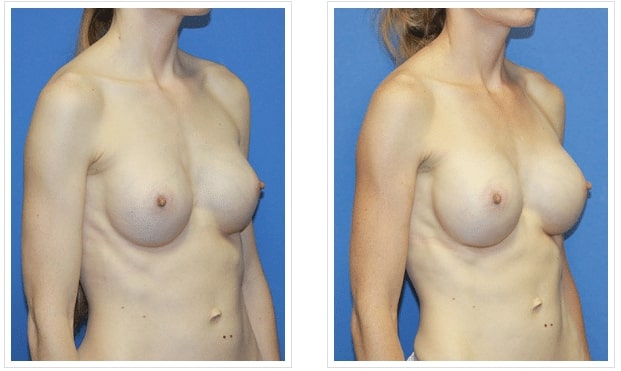
Changing Saline to Silicone for Rippling
Silicone breast implants are softer and less likely to have rippling. Patients with saline implants who have issues with ripping or want a more natural feeling breast implant often change to silicone implants. A simple, relatively inexpensive procedure with little downtime.
Rippling occurs when the breast implant has a fold or ripple that is either seen or felt in the breast. All breast implants ripple to some degree, but most patients cannot feel or see this rippling as it is hidden by the breast and tissue covering the implant. Different implants ripple at different rates based on the amount and type of “fill” of the implant.
Rippling risk factors
- Thin patient with little coverage
- Saline implants
- Textured implants
- Implants with a lower fill ratio
- Implant material that is less cohesive (solid)
- Subglandular implants
Silicone implants tend to ripple less than saline as the fill material holds it shape better than saline. Of silicone implants, brands and styles of implants that are more cohesive tend to ripple less. Textured implants tend to ripple more than smooth because the implant shell is thicker.
For saline implants overfilling is a valuable tool to minimize rippling. This is commonly misunderstood to imply filling the implant more than it should be. The implant manufacturers have a fill range for saline implants, and overfilling is simply filling on the larger side of this range. Overfilling results in more firmness and roundness of the implant but is generally an acceptable trade-off.


Breast Implant Symmetry or Malposition Correction
Implant asymmetry and malposition are common problems requiring breast implant revision surgery. During breast augmentation, implant pockets are created and assessed for size and symmetry before implant placement. If the pockets are improperly formed, there will be breast implant asymmetry. Even well-designed implant pockets can have asymmetric settling of implant position from external effects such as muscle effects.
Treatment often requires modification of the implant pocket on one or both sides. This most commonly involves capsule tightening and muscle release procedures. The implant pocket modification is usually easy on the patient but tough on the surgeon. Easy on the patient because there is very little pain afterward, and the recovery is often much more comfortable than the original augmentation. Tough on the surgeon because symmetry is much harder to achieve than during the initial surgery.
Sometimes accurate repair will require more aggressive techniques. Sometimes changing the implant position relative to the muscle is necessary. Changing from above the muscle to below or vice-versa. If soft tissue is compromised and will not “hold” the implant into the desired position, additional support with synthetic or biological material can be added to support the implant. This is the so-called “internal bra” procedure. These materials aren’t without cost or complications, and Dr. Yates uses these as an added level of security or when other methods would not be expected to work.
Breast implant asymmetry issues
- Implant position asymmetry
- Pectoral muscle asymmetry (natural or caused from surgery)
- Capsular contracture
- Droop of the breast over implants
- Poor soft tissue support
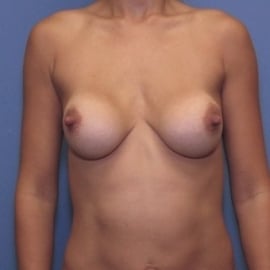

Capsular Contracture Surgery
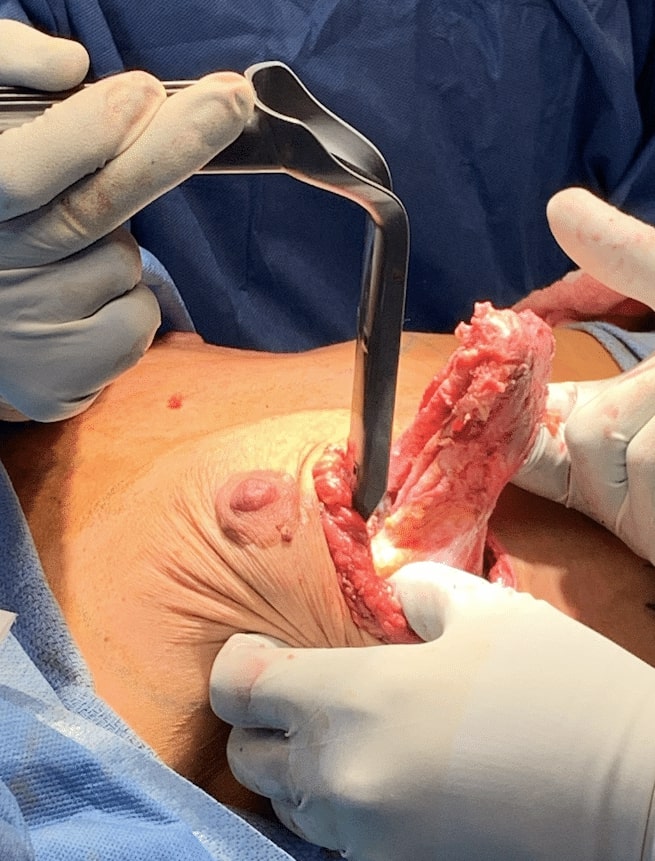
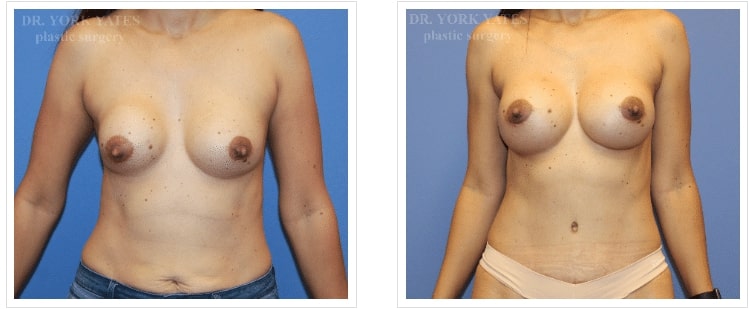
I believe Breast Implant Illness likely exists. Our bodies and our immune systems are so different; it would be unwise to deny that a rare population of people may react differently to any foreign body, including breast implants. My advice is that a patient considering breast augmentation should consider breast implant illness as well as a number of many other, more frequent, risks when making this decision. My advice to women who have implants and believe they may be causing illness is to see their Plastic Surgeon discuss these issues as well as their general medical doctor to rule out other conditions. Implant removal +/- capsule removal may be indicated. Click the link for my most recent blog post about breast implant illness.